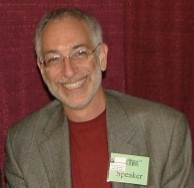
 I’d like to introduce to you my dear friend Mark David Gerson. He’s been a wonderful source of inspiration and an immeasurable pillar of support. Let’s get to know the man behind the legend.
Mark David Gerson is a filmmaker, award-winning author and creator of The Q’ntana Trilogy of fantasy novels and films. Mark David wrote the trilogy’s books and screenplays and is directing all three movies.
As a creativity catalyst and workshop facilitator, Mark David has guided writers and non-writers alike to connect with their innate wisdom, open to their creative power and express themselves with ease. He is also a broadcaster and popular speaker on topics related to creativity and spirituality, as well as an accomplished artist and photographer.
What do you think makes a good story?
There may be as many opinions on this one as there are readers and writers! But for me, a good story must engage me, touch me emotionally and be populated by multidimensional characters I care about. Once upon a time, I would read a book through to the end unless it was atrocious. Now, If I don’t develop some degree of emotional investment in the main characters, I’ll put it down. The same applies to movies.
How old were you when you wrote your first story? And, what was it about?
The first — and only — childhood story I remember writing was titled “The Monster Snowplow.” (I grew up in Montreal where snowy winters and massive snowblowers were very much part of my kidscape!) Although the story won kudos from my grade school teacher, I was largely shut down as a kid — both creatively and emotionally. I tried another story in my late 20s — a fictionalized version of the peculiar story surrounding my birth (which I detail in my Acts of Surrender memoir). But, even then, I wasn’t able to tap into the heart of the story because I wasn’t able to tap into my own heart. That story earned me no gold stars…because I was never able to finish it! It wasn’t until my early 30s that I began to break through my creative blocks and was able to write from an authentic place of feeling. It wasn’t long after that that my first novel, The MoonQuest, was born.
What’s it like to see your work, your novels, being turned into motion picture? What goes through your mind?
Even when I was writing that tortured first draft of The MoonQuest back in 1994, I saw the story visually and always believed that it would be a movie one day. I expected that some hotshot actor, director or producer would snap up the film rights to my book, hire a screenwriter and produce a blockbuster film. In that fantasy, my only job would be to deposit the producer’s check and then turn up, appropriately tuxedoed, at the star-studded Hollywood premiere, thrilled to see my words and worlds translated into images on a giant screen. I certainly never expected to write the screenplay. But I did — as a sort of spec exercise. Even then, I assumed that my participation in the film version would end once the screenplay was sold. Little did I know that I would end up directing — not just The MoonQuest, but its two Q’ntana Trilogy sequels as well.
What goes through my mind through all this? A roller-coaster ride of excitement, exhilaration, terror, overwhelm, panic, gratitude and humility. I’ve come to realize that my path with The MoonQuest and its sequels was never strictly about being a novel-writer. It was about being storyteller…which is ironic, given that in Q’ntana, The MoonQuest’s mythical setting, stories have been banned and storytellers have been put to death. As this story’s teller, my commitment, as I now see it, is not to any particular form (ie novel v. screenplay). It’s to the story itself, in all its forms. And what is a film director, if not a visual storyteller?
I see you’ve written the script for the film. How much has changed from the book?
All three Q’ntana screenplays are largely true to their respective books, and I wrote them as I wrote the books: trusting that the greater wisdom of the stories themselves would guide me through the change in form. I’m doing my best to carry that same level of trust and surrender into my role as film director, as well. Back to the screenplays, though… Because the books are written in the first person (a different protagonist for each book), I had some point-of-view challenges that forced me to shuffle a few StarQuest book scenes into The SunQuest screenplay. Or was it the other way around? With each story having two versions — novel and screenplay — even I get confused sometimes about which scene is in which version of which story!
What’s the collaborate effort for the film like? What feelings go through your head as you see others run with your work?
That’s a really great question and one for which I don’t yet have a real answer. The Q’ntana Trilogy’s film production team has not yet been assembled, so I don’t know how that’s going to work. What I do know is that that transition from flying solo (as writer) to traveling with a team (as director) will require a major adjustment — both creatively and organizationally…not to mention all the control issues I’m sure it will force me to deal with! At the same time, my deepest commitment is not to Mark David the author, Mark David the screenwriter or, even, Mark David the director. It’s to the story. And I’ll do my best to let that commitment be my guiding light in all my dealing with the actors and production teams.
Writer’s block. Believer or denier? As a writing coach what’s your stance and how do you overcome?
I could write a whole book on this one. Oh, wait. I have, sort of — The Voice of the Muse: Answering the Call to Write. While not strictly about writer’s block, it does address many of the issues that can cause it. It even has a section titled (with tongue somewhat in cheek) “The Myth of Writer’s Block.” I also have a blog post and video on the subject, where I go into much more detail than I can cover here. In short, though, we all have moments when we feel “blocked,” or unable to write. Yet, if you trust in your story, in its inherent wisdom, the words always come. They may not be the words you thought you wanted, they may not show up in the form you expected and they may not manifest according to your preferred timeline. But if you get out of your own way, they will find their way onto the page. There are lots of ways we can get in our own way and stifle the free creative flow that is as natural as breathing. In my blog post and video, I have broken them down into seven broad categories: Fear, Control, Rhythms & Routines, Perfectionism, Timing, Passion and Self-Respect. But the bottom line is that if you trust that your stories (and the characters that populate them) are smarter than you are, if you cultivate your intuitive listening powers, if you give up your need to be perfect and perfectly in control, and if you write from your passion, you’re much less likely to get stuck. As I write on the blackboard in every classroom I’ve ever taught in: “Write. Don’t think.”
The Q’ntana trilogy. I see the first book available on Amazon. Any hints as to when we can see the next novel?
Yes, The MoonQuest (Book I) is already out and, I’m pleased to say, an award-winner. And, yes, the paperback edition is on Amazon (with 29 five-star reviews!); ebook versions are also available — for Kindle, Nook, Kobo and iBook. As for The StarQuest (Book II) and The SunQuest (Book III), they are, miraculously, finished. While I don’t have firm publication dates, I expect that they’ll both be available in 2013 — The StarQuest by midyear and The SunQuest by year’s end.
Coffee? Tea? Or both? What fuels you? I notice you’re at starbucks often, would it be fair to say they might be listed in the credits of some future work?
Maybe I should re-title The StarQuest as The StarbucksQuest! I do spend a lot of writing time at Starbucks, less for the coffee than because I like working surrounding by an anonymous cafe-buzz. It’s probably because a writer’s life is largely a solitary one — at least mine has been — and working in cafes gets me out into the world. If you look at the acknowledgments of The MoonQuest, The Voice of the Muse: Answering the Call to Write and my newest book, Acts of Surrender: A Writer’s Memoir, you’ll see that particular cafes (not always Starbucks!) are always credited as having supported my creative process. I have yet to write acknowledgments for The StarQuest and The SunQuest. But I’m sure Starbucks will get a mention! Coffee v. tea? Although I’m largely a coffee drinker these days, certain drafts of certain books have certain demands. For example, when I was writing the last half of the first draft of Acts of Surrender, as well as its second draft, I had no interest in coffee; all I could drink was tea!
Ten years from now, where do you see yourself as a writer?
Ten years from now? I can barely project ahead to ten minutes from now!! I never expected to be a writer — never thought I wanted to be a writer. I never expected or thought I wanted to be a film director. In so many ways, my life has rarely gone as I have planned or expected. So, truly, it’s hard to say. Will I still be writing? Almost certainly. Will I still be directing? Ask me that in about two years, when The MoonQuest movie will be nearly ready for theaters! Beyond that, I do my best to surrender to the story I’m living in much the same way I surrender to the one I’m writing. All I can say is that whatever I’m doing a decade from now, as a writer or otherwise, is probably something I can’t even begin to imagine in this moment!
Alright, legendary coach, any tips for writers out there?
I have 13 “rules” for writers, which I explain in detail in The Voice of the Muse and outline on the home page of my website. The most important, however, is the first…which applies as fully to living a creative life as it does to creating stories on the page: “There are no rules: How can there be when creativity is all about breaking new ground and breaking old rules?”
__
Thank you so much, Mark David for the opportunity! Wish you the best on the film and your future career.
For more on Mark David Gerson, be sure to visit http://www.markdavidgerson.com